If we set s = a = b then s is a parameter that multiplies the off-diagonal elements of the interaction matrix. This animation shows how the eigenvalues grow as s increases with N = 100. Using this parameter we can examine the routes to chaos by changing s or by changing N. For each value of N the Hopf bifurcation occurs at a different value of s. The exact position oscillates but is damped as N increases:

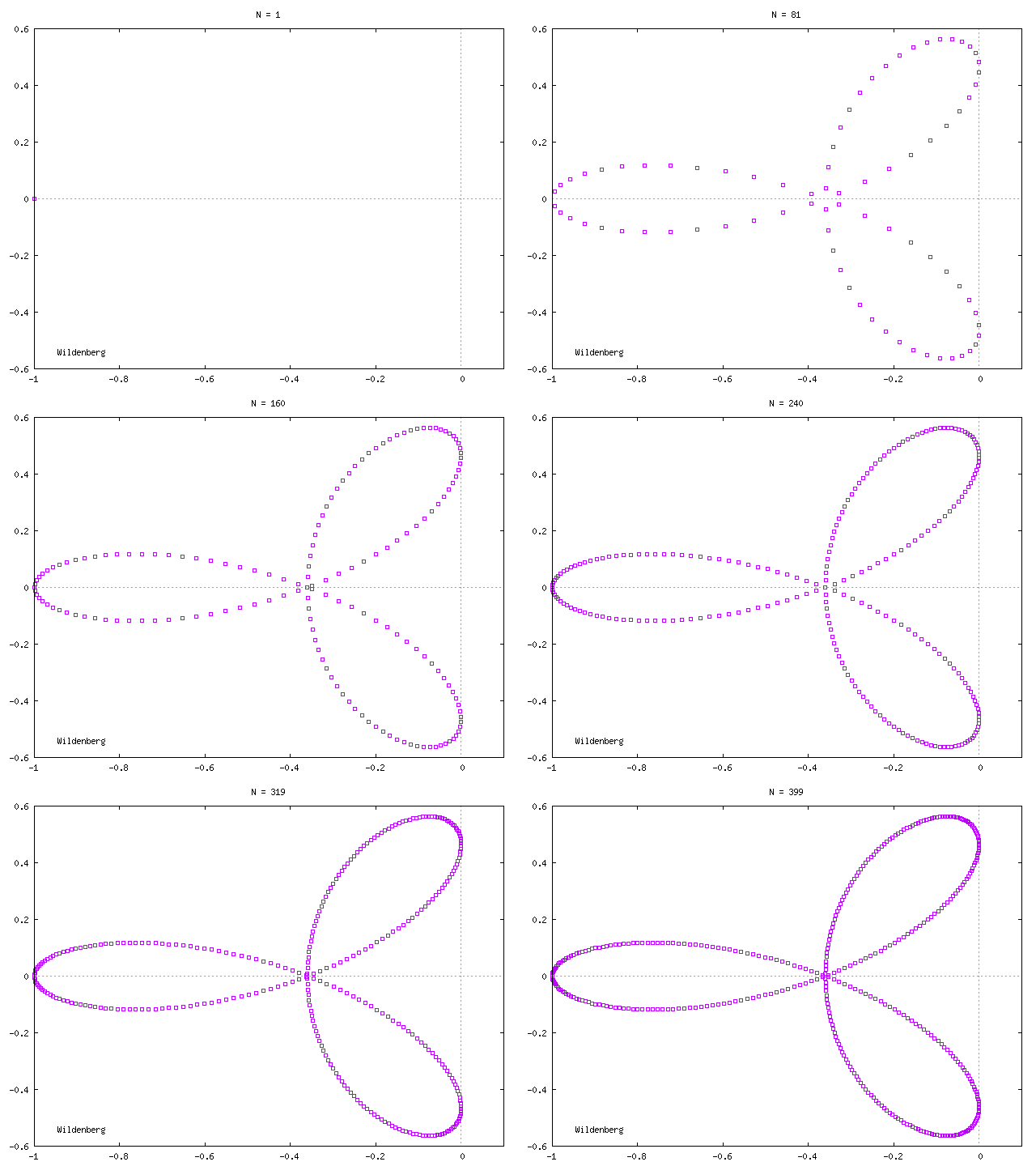
The eigenvalues for a given s value fall on a curve that does not change with N. The number of eigenvalues, however, does change, and it is a rotation of these eigenvalues to accommodate the new ones that produces the change in the position of the Hopf bifurcation. As N increases the curve becomes filled, so that the oscillations shrink. In the limit of large N the s value at the Hopf bifurcation is asymptotic to ~0.8888916. This animation shows the rotation of the eigenvalues as new ones are added (emanating from the fixed point).